
 Image 1 of 1
Learn photography course - 7th September to 12th October 2026 6.30 to 7.30pm NOW 10% OFF
NOW 10 % OFF
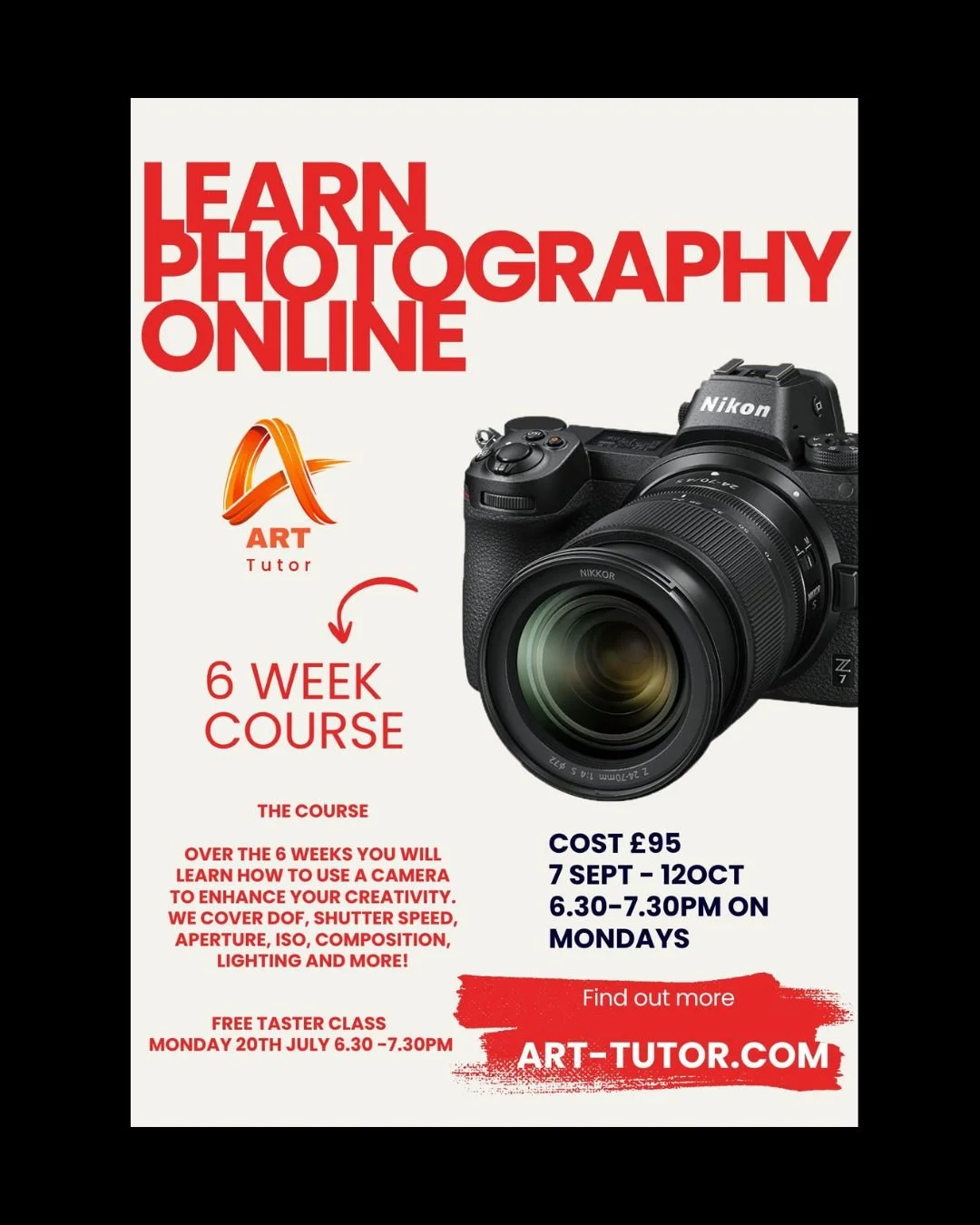
This photography course is online and can be done in the comfort of your own home. Each lesson is 1 hour long. The course takes place on mondays 7, 14, 21, 28 September & 5, 12 October via google meet 6 to 7pm. I will send out an invitation 24 hours before each lesson.
I will take you through the basics of learning photography using a camera. You’ll learn how to operate camera functions and buttons, control depth of field, use shutter speed and ISO effectively, work with lighting, and apply composition principles to create stronger images.
Course overview
Camera basics and controls: Learn the main parts of a camera, how to hold it, and how to use essential controls—mode dial, aperture, shutter release, exposure compensation, focus modes, metering, and white balance.
Aperture and depth of field: Understand how aperture (f-stop) affects exposure and depth of field. Practice controlling background blur and keeping subjects sharp for portraits, landscapes, and close-ups.
Shutter speed: Learn how shutter speed freezes or blurs motion. Explore settings for handheld shooting, panning, and long exposures (light trails, smooth water).
ISO and exposure: Learn how ISO affects sensitivity and noise. Combine ISO with aperture and shutter speed to get correct exposure while managing image quality.
Metering and exposure triangle: Use the exposure triangle (aperture, shutter speed, ISO) alongside metering modes to achieve the intended exposure for different lighting situations.
Lighting basics: Understand natural and artificial light, direction and quality of light, using reflectors and diffusers, and basic flash techniques for fill and creative effects.
Composition fundamentals: Apply rules and guidelines—rule of thirds, leading lines, framing, symmetry, negative space, patterns, and balancing elements—to make clearer, more compelling images.
Creative exercises: Hands-on assignments to reinforce each topic—manual exposure practice, depth-of-field tests, motion blur exercises, low-light/ISO experiments, and composition challenges.
Who this course is for
Beginners who want to learn to use a camera beyond automatic modes.
Hobbyists wanting better technical control and more intentional composition.
Anyone preparing to shoot portraits, landscapes, events, or everyday scenes with stronger results.
What you’ll need
A camera with manual (M), aperture-priority (A/Av), and shutter-priority (S/Tv) modes (DSLR, mirrorless, or advanced compact).
A lens (a standard kit zoom or a prime lens like 35mm or 50mm is sufficient).
A memory card, spare battery, and a basic tripod for slow-shutter practice.
Optional: reflector, external flash, lens cloth.
Learning outcomes By the end of the course you will be able to:
Confidently operate your camera’s main controls and switch between exposure modes.
Deliberately control depth of field and motion in your images.
Choose ISO settings that balance exposure and image noise.
Read and use light to improve mood and clarity in photos.
Compose images using fundamental design principles.
Complete simple post-shoot workflow steps: file management, basic edits, and exporting.
Format and pacing
Short lessons focused on one concept at a time, followed by practical exercises.
Mixed-format materials: concise explanations, example images, and step-by-step assignments.
Self-paced: practice each unit until you’re comfortable before moving on.
this course is currently 20% off the full price
Assessment and feedback
Practical assignments reviewed by peers or an instructor (if available).
Suggested checkpoints: submit a set of images for each major topic—exposure, depth of field, motion, low light, and composition.
Tips for getting the most from the course
Practice daily or as often as possible; deliberate, varied practice accelerates learning.
Shoot in different lighting conditions and environments.
Review your images critically: what worked, what didn’t, and why.
Experiment with creative choices—break rules intentionally once you understand them.
This course gives you the technical foundation and compositional tools to move from automatic shooting to purposeful photography. The course price is currently 10% off the full price.
NOW 10 % OFF
This photography course is online and can be done in the comfort of your own home. Each lesson is 1 hour long. The course takes place on mondays 7, 14, 21, 28 September & 5, 12 October via google meet 6 to 7pm. I will send out an invitation 24 hours before each lesson.
I will take you through the basics of learning photography using a camera. You’ll learn how to operate camera functions and buttons, control depth of field, use shutter speed and ISO effectively, work with lighting, and apply composition principles to create stronger images.
Course overview
Camera basics and controls: Learn the main parts of a camera, how to hold it, and how to use essential controls—mode dial, aperture, shutter release, exposure compensation, focus modes, metering, and white balance.
Aperture and depth of field: Understand how aperture (f-stop) affects exposure and depth of field. Practice controlling background blur and keeping subjects sharp for portraits, landscapes, and close-ups.
Shutter speed: Learn how shutter speed freezes or blurs motion. Explore settings for handheld shooting, panning, and long exposures (light trails, smooth water).
ISO and exposure: Learn how ISO affects sensitivity and noise. Combine ISO with aperture and shutter speed to get correct exposure while managing image quality.
Metering and exposure triangle: Use the exposure triangle (aperture, shutter speed, ISO) alongside metering modes to achieve the intended exposure for different lighting situations.
Lighting basics: Understand natural and artificial light, direction and quality of light, using reflectors and diffusers, and basic flash techniques for fill and creative effects.
Composition fundamentals: Apply rules and guidelines—rule of thirds, leading lines, framing, symmetry, negative space, patterns, and balancing elements—to make clearer, more compelling images.
Creative exercises: Hands-on assignments to reinforce each topic—manual exposure practice, depth-of-field tests, motion blur exercises, low-light/ISO experiments, and composition challenges.
Who this course is for
Beginners who want to learn to use a camera beyond automatic modes.
Hobbyists wanting better technical control and more intentional composition.
Anyone preparing to shoot portraits, landscapes, events, or everyday scenes with stronger results.
What you’ll need
A camera with manual (M), aperture-priority (A/Av), and shutter-priority (S/Tv) modes (DSLR, mirrorless, or advanced compact).
A lens (a standard kit zoom or a prime lens like 35mm or 50mm is sufficient).
A memory card, spare battery, and a basic tripod for slow-shutter practice.
Optional: reflector, external flash, lens cloth.
Learning outcomes By the end of the course you will be able to:
Confidently operate your camera’s main controls and switch between exposure modes.
Deliberately control depth of field and motion in your images.
Choose ISO settings that balance exposure and image noise.
Read and use light to improve mood and clarity in photos.
Compose images using fundamental design principles.
Complete simple post-shoot workflow steps: file management, basic edits, and exporting.
Format and pacing
Short lessons focused on one concept at a time, followed by practical exercises.
Mixed-format materials: concise explanations, example images, and step-by-step assignments.
Self-paced: practice each unit until you’re comfortable before moving on.
this course is currently 20% off the full price
Assessment and feedback
Practical assignments reviewed by peers or an instructor (if available).
Suggested checkpoints: submit a set of images for each major topic—exposure, depth of field, motion, low light, and composition.
Tips for getting the most from the course
Practice daily or as often as possible; deliberate, varied practice accelerates learning.
Shoot in different lighting conditions and environments.
Review your images critically: what worked, what didn’t, and why.
Experiment with creative choices—break rules intentionally once you understand them.
This course gives you the technical foundation and compositional tools to move from automatic shooting to purposeful photography. The course price is currently 10% off the full price.